
 By James Anderson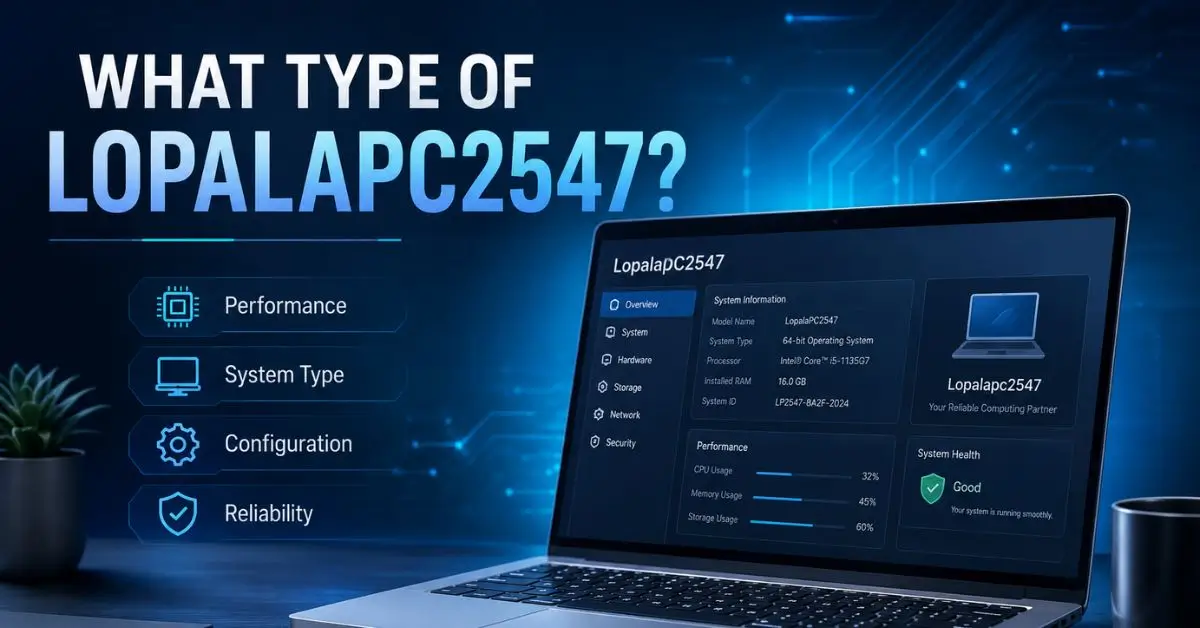
When you come across an unfamiliar software name or platform identifier, the first and most important question is always the same. What type of thing is this? What category does it belong to? Understanding the type of a piece of software tells you immediately what it is designed to do, who it is built for, and whether it belongs on your computer.
That question becomes especially important with platforms that carry version identifiers like PC2547. These labels communicate specific information, but only if you know how to read them. Without that context, deciding whether to install, use, or trust a piece of software becomes significantly harder than it needs to be.
This guide answers the question of what type of LopalaPC2547 is directly and clearly. It covers the software category this platform belongs to, what that category means in practical terms, how to identify and evaluate software types generally, and what every PC user should understand about version-identified applications before engaging with them.
What type of LopalaPC2547 refers to the classification question surrounding this specific PC software platform and its version build. LopalaPC2547 belongs to the category of PC-specific digital platform applications, meaning it is a software build designed and optimized to run within a personal computer environment, delivering a defined set of digital functions or experiences to users through their desktop or laptop hardware and operating system.
LopalaPC2547 is a PC-specific software platform application identified by its version build number. This guide explains what type of software it is, what that classification means for users, how it compares to other software types, and what to know before installing or using it.
Before getting into what type of LopalaPC2547 is specifically, it is worth understanding why classifying software by type matters in the first place.
Software type tells you several important things before you ever open an application. It tells you what the software is designed to do, what kind of system resources it will use, what permissions it is likely to request, and what kind of experience to expect as a user.
Installing a system utility expecting a productivity tool creates frustration. Downloading what you think is a media player and discovering it is a platform client with ongoing connectivity requirements changes how you need to think about your network usage and data privacy. These mismatches happen when users engage with software without understanding its fundamental type.
PC software in particular benefits from clear type classification because the Windows ecosystem contains an enormous diversity of application categories, from lightweight standalone utilities to complex platform clients that require ongoing internet connectivity, background processes, and regular updates. Knowing where a piece of software sits in that landscape before you install it is basic digital literacy.
To understand what type of LopalaPC2547 is, it helps to first understand the main categories of PC software and what distinguishes each one.
Standalone Applications
Standalone applications are self-contained programs that run independently without requiring a persistent connection to an external service or platform. They install on your PC, use local system resources, and function fully without internet access once installed.
Examples include text editors, local media players, image editing software, and offline games. These applications are straightforward because they do not depend on external services to function and do not typically run background processes when you are not actively using them.
Platform Client Applications
Platform clients are applications that connect your PC to a broader digital platform or service ecosystem. They require internet connectivity to function fully, maintain ongoing connections to servers, receive regular updates, and often run background processes even when not actively in use.
Examples include gaming clients like Steam, collaboration platforms like Slack or Discord, and streaming service desktop applications. These applications serve as the bridge between the user’s local PC hardware and a larger digital service environment.
System Utility Applications
System utilities are designed to manage, optimize, or monitor the PC itself rather than deliver a specific user-facing experience. They interact with the operating system, hardware drivers, and system resources to improve performance, security, or functionality.
Examples include antivirus software, disk management tools, driver update utilities, and system monitoring applications. These typically run persistently in the background and interact closely with the core operating system.
Gaming and Interactive Applications
This category covers software specifically designed to deliver interactive digital experiences, including games, simulation environments, and interactive platforms. These applications tend to be more resource-intensive than other software types because they actively use the processor, GPU, and audio systems simultaneously.
PC gaming platforms and their associated software builds fall into this category, which is relevant when understanding what type of application LopalaPC2547 represents.
Version-Specific Platform Builds
This is the most directly relevant category for understanding LopalaPC2547. Version-specific platform builds are software releases identified by specific build numbers or version codes that communicate exactly which release of a platform a user is running.
The “PC2547” identifier in LopalaPC2547 signals that this is a PC-specific build of the Lopala platform, numbered at the 2547 release point. This type of software is a platform client with version tracking, meaning it belongs to an actively developed application that releases numbered updates over time to address bugs, add features, and maintain compatibility.
The “PC” component of LopalaPC2547 is not decorative. It carries specific meaning about how the software is built and what environment it is designed for.
A PC designation in a software identifier means the build has been specifically developed and optimized for personal computer hardware and the Windows operating system environment. This is distinct from a mobile build, a web application, a console-specific release, or a cross-platform version designed to run identically across multiple device types.
PC-specific builds take advantage of the hardware capabilities available on desktop and laptop computers that other platforms do not offer. These include the processing power of multi-core desktop processors, the storage speed of modern SSDs, the input precision of keyboard and mouse controls, and the display capabilities of monitors with high refresh rates and resolutions.
When a developer releases a PC-specific build like LopalaPC2547, they are making deliberate choices about how the software leverages those hardware capabilities. A well-built PC-specific application performs better on PC hardware than a generic cross-platform version of the same software because it has been optimized for the specific environment rather than built to a lowest common denominator across all platforms.
This matters practically because it tells you that LopalaPC2547 is designed to take full advantage of your PC hardware rather than simply running on it.
The number component of LopalaPC2547 identifies the specific release or build of the platform. Understanding what version numbers communicate helps you make better decisions about installation, updates, and compatibility.
Version numbers in software serve several practical functions.
Release tracking is the primary purpose. Every time a developer releases a new version of their software, they assign it a number that distinguishes it from all previous and future releases. This allows both users and developers to know exactly which version is being discussed, installed, or troubleshot at any given time.
Compatibility signaling is another key function. System requirements, compatible operating systems, and hardware specifications are tied to specific version numbers. A requirement that applies to version 2547 may not apply identically to version 2548 or version 2500. Knowing your version number is the foundation of any compatibility check.
Update management relies entirely on version tracking. When a newer version becomes available, the version number tells you whether you are on the current release, an earlier build, or an intermediate version. This information determines whether updating is necessary, optional, or immediately advisable based on what changed between versions.
Support and troubleshooting also depends on version identification. When reaching out to technical support or posting in a community forum about an issue, the version number is one of the first pieces of information requested because the same underlying problem can manifest differently across different builds of the same platform.
Understanding what type of LopalaPC2547 is gives you the foundation for evaluating it properly before installation. This framework applies to any PC software, not just this specific platform.
Identify the software category first. Is it a standalone application, a platform client, a system utility, or a gaming application? Each type has different resource implications, connectivity requirements, and background process behavior. Knowing the type sets appropriate expectations before you open the installer.
Check the source before downloading. Regardless of software type, always download from the official platform website or a verified distribution partner. Third-party download sites frequently bundle additional software or modified versions that introduce security risks.
Review the permissions requested during installation. PC software installers disclose what access they require from your system. Review these permissions carefully and question any that seem disproportionate to what the software is supposed to do. A simple utility should not need access to your contacts or financial information.
Understand the background process behavior. Platform client applications frequently run background processes that consume system resources and maintain network connections even when you are not actively using them. Knowing this in advance allows you to manage startup behavior and resource allocation appropriately.
Check update and support policies. Actively developed software with regular version releases and accessible support documentation is a better long-term choice than software with no visible update history or community presence. The version numbering system of LopalaPC2547 suggests active development, which is a positive sign.
| Software Type | Internet Required | Background Processes | Resource Usage | Best Example Use Case |
|---|---|---|---|---|
| Standalone Application | No | Minimal | Low to moderate | Offline tools and local media |
| Platform Client | Yes | Moderate to high | Moderate to high | Gaming clients, collaboration apps |
| System Utility | Sometimes | Often persistent | Low to moderate | Antivirus, disk tools, drivers |
| Gaming Application | Often | Moderate | High | Interactive games and simulations |
| Version-Specific Build | Depends on platform | Depends on type | Depends on type | LopalaPC2547 and similar builds |
Once you understand what type of application LopalaPC2547 is, you can approach using it more effectively.
Keep the version current. Platform client applications and version-specific builds benefit significantly from staying on the most recent stable release. Updates address security vulnerabilities, performance issues, and compatibility problems that affect earlier versions.
Manage startup behavior intentionally. Many platform client applications set themselves to launch at Windows startup by default. If you do not use the application daily, disabling startup launch prevents it from consuming system resources every time your PC boots.
Monitor resource usage during initial use. When first using any platform client, spend a few minutes watching Task Manager to understand how the application uses your processor and RAM. This tells you whether it is behaving as expected or consuming more than it should.
Use official support channels for issues. Version-specific software builds have corresponding support documentation and community resources tied to that exact release. Using official channels ensures you receive guidance relevant to your specific version rather than general advice that may not apply.
Understanding what type of LopalaPC2547 is gives you the foundation for every other decision related to this software. Software type determines resource expectations, connectivity requirements, update behavior, and how the application fits into your overall PC usage.
LopalaPC2547 is a PC-optimized platform application with version tracking, which tells you it is actively developed, designed specifically for desktop and laptop hardware, and part of a broader platform ecosystem. That classification shapes how you install it, how you manage it, and how you troubleshoot it when something does not work as expected.
If you want to go deeper on related topics, explore our guide on how to evaluate PC software before installing or our practical breakdown of how software version numbers work and what they tell you. Both offer the same direct, practical approach to understanding technology on your terms.
LopalaPC2547 is a Windows PC platform application with version build 2547, designed for desktop use and regular updates.
It indicates the software is built specifically for Windows PCs, offering better desktop performance than mobile or web versions.
A platform client connects to online services and receives updates, while standalone software runs locally without internet dependence.
No. Background processes are normal, but if CPU or RAM usage is unusually high, check for updates or review the app’s settings.
Compare your PC’s processor, RAM, storage, and Windows version with the software’s official system requirements. Recommended specs provide the best performance.