
 By James Anderson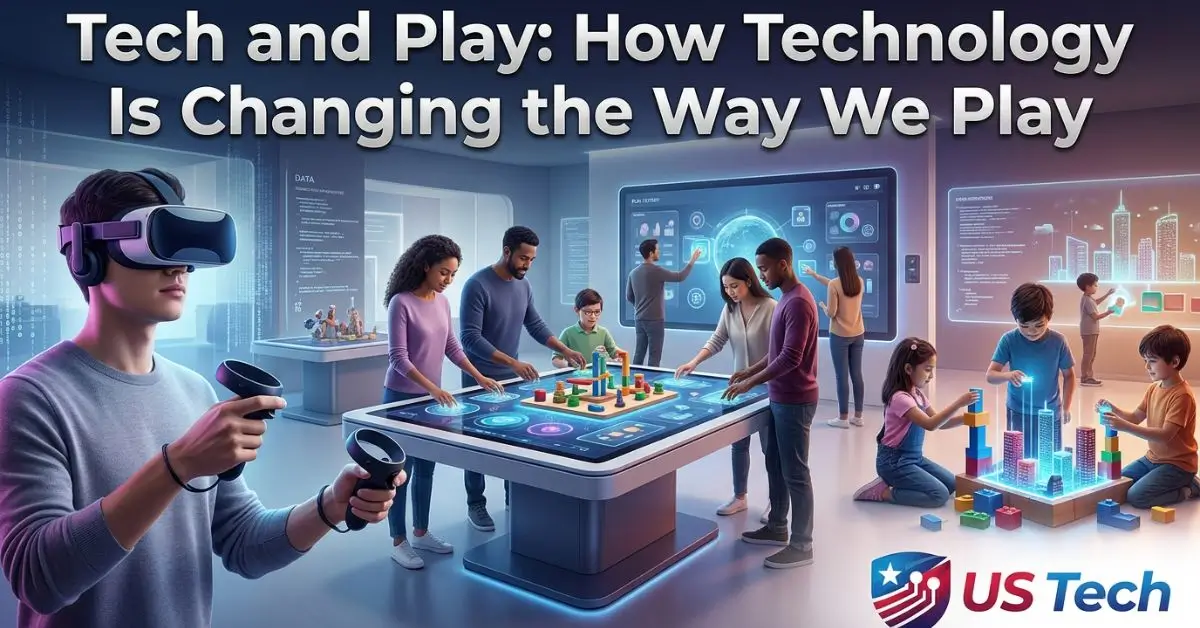
There was a time when “play” meant a ball, a backyard, and maybe a board game on a rainy afternoon. That world still exists, but it sits right next to a much bigger one, where play happens on screens, inside virtual worlds, through apps, and with robots that respond to your voice.
The line between technology and play has quietly blurred. And that shift is affecting everyone: kids learning through games, adults unwinding in digital spaces, teachers using interactive tools, and developers building entire careers around making play more immersive.
If you’ve ever wondered what “tech and play” really means, why it matters, and how it’s shaping daily life in 2026, this guide breaks it all down clearly.
“Tech and play” refers to the growing connection between digital technology and recreational or learning-based activities. It covers everything from educational apps and gaming to robotics and VR. This guide explains what it means, why it matters, and how it affects kids, adults, and learners at every stage.
Tech and play is the intersection of digital or interactive technology with recreational, creative, or learning-based activities. It includes any experience where technology becomes the tool or the playground itself, whether someone is solving a puzzle on a tablet, building in Minecraft, or exploring a virtual museum through a VR headset.
This isn’t just about video games. It’s a much broader idea that covers how modern technology shapes the way humans explore, create, compete, and learn through play.
Play has always been how people, especially children, process the world around them. Technology has simply given that instinct a new set of tools.
In 2026, the average American child spends several hours a day interacting with some form of technology. Adults aren’t far behind. But quantity isn’t the real issue here; quality and purpose are.
When technology is used well in the context of play, it can:
- Build problem-solving skills faster than traditional methods
- Make learning feel less like work and more like a challenge worth taking on
- Create social connections across distance: A kid in Ohio can play a cooperative game with a cousin in London
- Spark creativity in ways that paper and crayons alone can’t
The concern isn’t technology itself. It’s whether the technology is being used passively (just watching) or actively (doing, creating, thinking). That distinction matters a lot.
Not all tech-based play looks the same. It helps to break it down into clear categories.
This covers apps, platforms, and tools designed specifically to teach through engagement. Think Khan Academy Kids, ABCmouse, or Duolingo. These platforms use game mechanics, points, levels, and streaks to make learning feel like play.
The key is that the learning is built into the experience. A child isn’t stopping play to do a lesson. The lesson is the play.
Schools across the US have adopted these tools heavily since 2020. A third-grade classroom in Austin, Texas, for example, might use interactive math games on iPads daily, replacing traditional worksheets with challenges that adjust based on how each student performs.
This is probably what most people picture when they hear “tech and play.” Gaming has grown into one of the largest entertainment industries in the world, and for good reason.
Modern games are complex. They require strategic thinking, fast decision-making, teamwork, and creativity. Games like Roblox, Fortnite, and Minecraft are especially interesting because they’re not just games; they’re creative platforms where players build worlds, run in-game economies, and collaborate with millions of others.
Gaming isn’t only for teenagers. The average gamer in the US is in their mid-30s. Adults play for stress relief, social connection, and increasingly professional competition in esports.
LEGO Mindstorms, Sphero robots, and coding kits like Kano bring tech and play together in a physical way. Kids build, program, and control real machines. This kind of play develops engineering thinking without feeling like engineering class.
These tools are especially effective because they combine physical action with digital logic. A child has to think through a problem, code a solution, and then watch a robot either succeed or fail and then try again.
AR and VR are no longer sci-fi. Consumer headsets like the Meta Quest series have made immersive experiences genuinely accessible. Whether it’s exploring ancient Rome in a history app, playing Beat Saber, or attending a virtual sports event, this type of play puts the user inside the experience.
This has serious potential for both entertainment and education. Medical students are using VR to practice procedures. Kids are using AR apps to see how planets move in their living rooms.
Platforms like TikTok, YouTube Studio, and even Canva have turned content creation into a form of play for millions. Making a video, designing a thumbnail, and editing a short clip, these feel like creative games, especially for younger generations who grew up treating screens as creative tools, not just viewing windows.
| Feature | Traditional Play | Tech-Enhanced Play |
|---|---|---|
| Location | Physical spaces | Anywhere with a device |
| Social interaction | In-person | In-person + online |
| Learning feedback | Delayed | Immediate |
| Creativity tools | Physical materials | Digital + physical |
| Accessibility | Limited by location | Available globally |
| Screen time concerns | Not applicable | Real concern |
| Cost | Low to moderate | Varies widely |
Neither type is better across the board. The best outcomes usually come from a mix of both.
When used intentionally, the connection between interactive technology and play produces measurable results:
For children:
- Better reading and math scores when educational games are used consistently
- Improved hand-eye coordination and spatial reasoning
- Higher engagement and motivation compared to passive learning
For adults:
- Stress reduction through gaming and immersive experiences
- Sharpened cognitive skills particularly through strategy games
- Social connection, especially for people in isolated environments
For learners of all ages:
- The freedom to fail safely, try again, and learn from mistakes without real-world consequences
Balance is the honest part of this conversation. Tech and play have real benefits, but they also come with legitimate risks:
Screen time overload is the most common concern. The American Academy of Pediatrics has guidelines for children’s screen use, and for good reason too much passive screen time can interfere with sleep, physical activity, and face-to-face development.
Content quality varies wildly. Not every app or game is designed with the child’s best interest in mind. Some use addictive mechanics to keep users engaged longer, not to help them learn or grow.
Digital access is unequal. Not every family in the US has reliable internet or modern devices. The benefits of tech-based play aren’t equally distributed, and that gap matters.
Being aware of these limits doesn’t mean avoiding technology; it means choosing wisely and staying engaged with what your kids (or you) are actually doing.
A few practical tips that actually work:
- Choose active over passive. Games where you build, solve, or create are almost always better than ones where you just watch or tap mindlessly.
- Set time limits with intention. Forty-five minutes of focused, purposeful play is far more valuable than three hours of drifting.
- Play together when you can. Co-playing with a child is one of the most effective ways to understand what they’re engaging with and why.
- Mix screen and non-screen play. The best play routines include both. Physical play develops things that digital play simply can’t.
- Look for feedback loops. Good educational tech gives immediate, useful feedback. If an app just rewards clicking with animations, it probably isn’t teaching much.
Tech and play aren’t trends to worry about or buzzwords to ignore. It’s a real shift in how people, especially younger generations, explore, learn, and connect. The technology itself is neutral. What matters is how deliberately you use it.
If you’re a parent, educator, or simply someone curious about how digital tools are reshaping everyday life, the best move is staying informed and staying involved. Choose experiences that challenge and create, not just ones that entertain passively.
Explore more guides on US Tech to stay ahead of what’s changing in the world of technology and what it means for your daily life.
Tech and play means using technology for fun, learning, or creative activities. It includes digital games, educational apps, robotics, and VR any interactive tech used beyond passive screen watching.
It depends on how it’s used. Active, creative tech play builds real skills. Passive or addictive use crowds out healthier habits. Intention and balance matter more than the device itself.
Experts recommend limited, supervised use under age two, with gradual increases after that. By ages six to ten, quality educational games add genuine value. The American Academy of Pediatrics has clear age-based guidelines worth checking.
It adds instant feedback, virtual worlds, and online collaboration. Used well, it builds problem-solving and creativity. Overused or poorly chosen, it can reduce physical activity and limit face-to-face social skills.
Yes, many games genuinely teach. Minecraft is used in US classrooms to cover geometry and teamwork. The key is whether a game challenges thinking. Not every game qualifies, but the category is larger than most people assume.