
 By James Anderson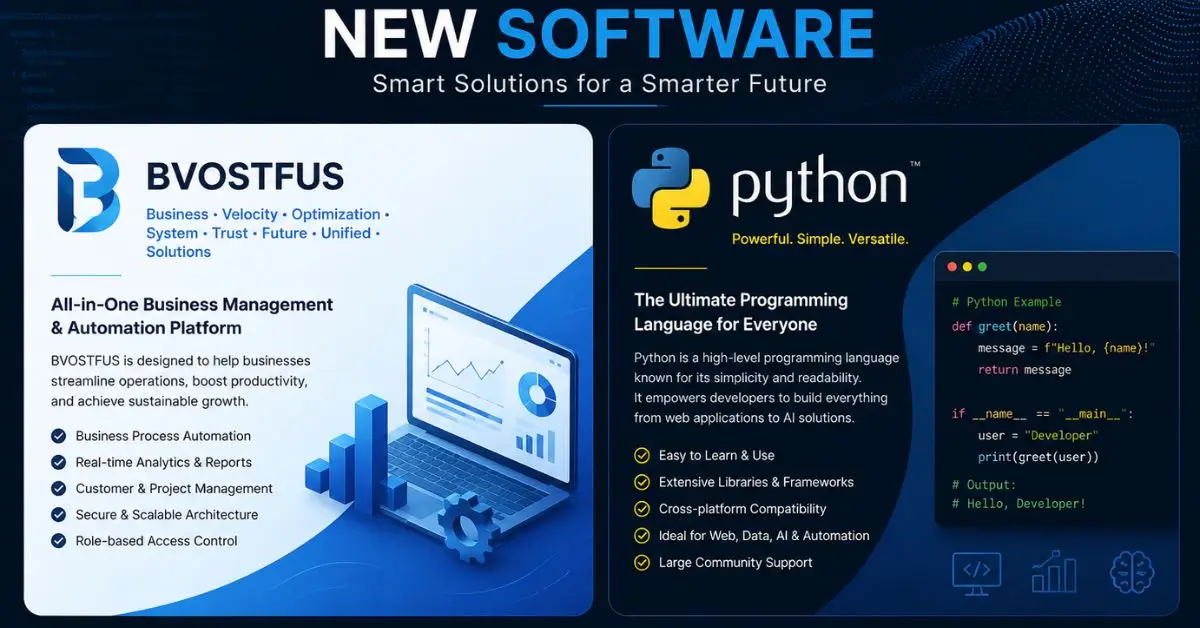
The Python ecosystem moves fast. New tools, libraries, and software packages appear regularly, and knowing which ones are worth your time is genuinely difficult. Most developers have experienced the frustration of spending hours setting up a tool, only to realize it does not actually fit their workflow.
If you have come across the term bvostfus in relation to Python and are not sure what it is, what it does, or whether it is relevant to your work, you are in the right place.
This guide covers exactly what new software bvostfus Python refers to, how it fits into modern Python development, what problems it is designed to solve, and how to approach it practically whether you are a beginner or an experienced developer.
Bvostfus is an emerging Python-based software tool designed to streamline specific development or data processing workflows within the Python environment. Like many newer Python packages, it builds on existing Python infrastructure to offer a more focused, optimized solution for tasks that general-purpose libraries handle less efficiently. It represents the broader trend of specialized tooling within the Python software development space.
Bvostfus is a newer Python-oriented software tool. This guide explains what it does, how it compares to similar tools, practical use cases, and how to start using it without getting lost in technical complexity. Clear, direct, and built for real developers.
Python has become one of the most widely used programming languages in the world. It powers everything from web applications and data pipelines to machine learning models and automation scripts.
Because of that broad adoption, the Python ecosystem is constantly expanding. Developers build new tools to solve specific problems that larger, general-purpose libraries handle awkwardly or slowly. That is how packages like NumPy, FastAPI, and Pydantic gained traction: they did one thing significantly better than what came before.
New software like bvostfus follows this same pattern. It enters the ecosystem to address a gap, whether that is performance, simplicity, integration, or workflow efficiency. Understanding where a new tool fits in that landscape is the first step to deciding whether it belongs in your stack.
Bvostfus is a Python-compatible software package that sits within the broader category of development utility tools. Its core function is to handle specific processing or workflow tasks that Python developers encounter in data-heavy or automation-focused environments.
At its foundation, bvostfus works within the standard Python runtime, meaning it does not require a separate interpreter or a parallel language stack. You install it like any other Python package, import it into your project, and call its functions or classes as needed.
What makes it stand out compared to older tools in similar spaces is its focus on speed and clean syntax. Newer Python tools increasingly prioritize developer experience alongside raw performance, and bvostfus reflects that philosophy. The goal is to reduce the amount of boilerplate code a developer has to write while maintaining predictable, testable output.
Think of it this way: if you have ever used Python’s built-in subprocess module and felt like you were fighting the API to do something straightforward, a specialized tool in the same category can eliminate that friction. Bvostfus aims to occupy that role in its specific domain.
One of the most practical questions about any new software tool is, where does it actually live in my project?
Bvostfus is designed to integrate cleanly with existing Python workflows. It does not force you to restructure your codebase or adopt a new paradigm. Instead, it drops into your existing setup and handles specific tasks more efficiently than manually written alternatives.
For data processing workflows, bvostfus can handle batch operations with less code. Instead of writing custom loops and exception handlers for every data transformation, the tool provides structured methods that manage that logic internally. This reduces both development time and the surface area for bugs.
For automation scripts, it offers pre-built patterns for common operations: file handling, API calls, and data formatting that developers typically rewrite from scratch on every project. Having those patterns in a reliable, tested package saves real hours over the course of a project.
For development and testing environments, bvostfus supports clean integration with tools like pytest and virtual environments. This means you can add it to your existing testing pipeline without additional configuration overhead.
A US-based example: a mid-size software development team in Austin, Texas, working on an internal data pipeline for a retail client could integrate bvostfus to replace three custom utility modules they maintain manually. The result is less code to maintain, more consistent behavior, and faster onboarding for new developers joining the project.
Setting up new software with Python follows the same standard process as most Python packages. Here is a straightforward walkthrough.
Step 1: Set Up a Virtual Environment
Always start with a virtual environment. This keeps your project dependencies isolated and prevents version conflicts with other projects on the same machine.
textpython -m venv bvostfus-env
source bvostfus-env/bin/activate  # On Windows: bvostfus-env\Scripts\activate
Step 2: Install the Package
Once your environment is active, install boost-fus using pip:
textpip install bvostfus
If the package is distributed through a specific registry or requires additional dependencies, check the official documentation for any modified install instructions.
Step 3: Import and Initialize
Basic usage follows standard Python import patterns:
Pythonimport bvostfus

processor = bvostfus.Processor()
result = processor.run(data=your_data)
The exact API will depend on the version and the specific module you are using. Always reference the official documentation for the version installed in your environment.
Step 4: Configure for Your Use Case
Most well-designed Python tools offer configuration options either through a config file, environment variables, or initialization parameters. Take time to review these before building your implementation. Default settings work for general cases, but production environments almost always benefit from explicit configuration.
It helps to see how a new tool stacks up against the alternatives you might already be using.
| Feature | Bvostfus | Standard Library Modules | Popular Third-Party Libraries |
|---|---|---|---|
| Setup Complexity | Low | None (built-in) | Low to Medium |
| Performance on Specialized Tasks | High | Moderate | Varies |
| Code Simplicity | High | Low to Medium | Medium |
| Community Support | Growing | Established | Established |
| Documentation Quality | Developing | Strong | Strong |
| Integration with pytest | Yes | Yes | Yes |
| Ideal For | Focused workflows | General tasks | Broad use cases |
The honest takeaway here is that bvostfus makes the most sense when you have a specific workflow problem that standard modules handle awkwardly. If your needs are general, the standard library or an established third-party tool is likely sufficient. But for targeted optimization, newer focused tools like BVOSTFUS offer real value.
Knowing when to reach for a tool is as important as knowing how to use it.
Batch data transformation. Projects that process large volumes of structured data (CSV files, JSON records, API responses) benefit from tools that handle iteration, error handling, and output formatting in a clean, consistent way. Bvostfus fits naturally here.
Internal tooling and scripts. Development teams often build internal tools, deployment helpers, log parsers, and report generators using Python. These projects benefit from stable, purpose-built utilities rather than custom one-off code. Adding a tool like bvostfus reduces technical debt over time.
Rapid prototyping. When you need to build a proof of concept quickly, using a tool that handles common patterns out of the box speeds up the process without locking you into an architecture you will regret later.
Learning and experimentation. For developers who are actively exploring the Python ecosystem, working with newer tools like bvostfus builds practical familiarity with how modern Python packages are designed. That experience transfers across tools and projects.
Whether you are evaluating bvostfus or any other new Python tool, a few habits make the process smoother and safer.
Pin your versions. When adding any new package to a production project, pin the version in your requirements.txt file. New packages can introduce breaking changes in minor updates. Pinning protects you.
Read the changelog before upgrading. When a new version of any Python software releases, read the changelog before updating in a production environment. This takes five minutes and prevents the kind of breakage that can take hours to debug.
Test in isolation first. Before integrating a new tool into a live project, test it in a sandbox environment with representative data. This gives you confidence in its behavior before it touches production systems.
Check the GitHub activity. For newer tools especially, GitHub repository activity tells you a lot. Recent commits, active issue responses, and a growing contributor count are all positive signals. A repository that has not been touched in a year is a risk, regardless of how good the initial release looked.
Follow the Python community. Platforms like Real Python, Python Weekly, and the official Python Discord keep you informed about which new tools are gaining traction and which ones are being abandoned. Staying connected to the community is one of the best ways to evaluate new software early.
Every tool has limits, and newer software comes with specific ones worth knowing upfront.
Bvostfus, like most recently released Python packages, has a smaller community compared to established tools. That means fewer Stack Overflow answers, fewer tutorials, and less collective troubleshooting knowledge available when something goes wrong.
Documentation for new software is also often a work in progress. Expect gaps, especially around edge cases and advanced configuration options. This is normal for early-stage tools, but it does mean you may need to read the source code directly to understand certain behaviors.
These are not reasons to avoid new software; they are reasons to approach it with realistic expectations and to contribute back to the community when you find useful information worth sharing.
The Python ecosystem rewards developers who stay curious and keep testing new tools. New software bvostfus Python represents exactly the kind of focused, practical tooling that makes Python development faster and cleaner when applied to the right problems.
The key is evaluating it honestly, understanding what it does well, where it has limits, and whether it genuinely fits your workflow rather than just adding another dependency for its own sake.
Start small. Test in a sandbox. Read the documentation. And build confidence gradually before committing it to production work.
If you want to go further, check out our guide on how to evaluate new Python packages before adding them to your project, or read our breakdown of the best Python development tools for building efficient workflows in 2024. Both connect directly to what this article covers.
Run pip install bvostfus in your terminal after activating a virtual environment. Always use a virtual environment to keep dependencies isolated and avoid version conflicts across projects.
It carries more risk than established packages simply because it has less real-world testing. Test it thoroughly in a staging environment first, pin the version, and have a rollback plan ready before deploying to production.
Standard libraries are built into Python and handle general tasks. Bvostfus is a third-party tool built for specific workflow patterns the standard library handles with too much boilerplate. Use it when you have a clear, recurring problem it solves better.
Most modern packages target Python 3.8 and above. Check the PyPI listing for exact requirements. For new projects, Python 3.10 or higher is a safe, well-supported baseline.
Start with Real Python (realpython.com), the official Python docs (docs.python.org), and the PyPI repository (pypi.org). The Python subreddit and Python Weekly newsletter are also solid for staying current.