
 By James Anderson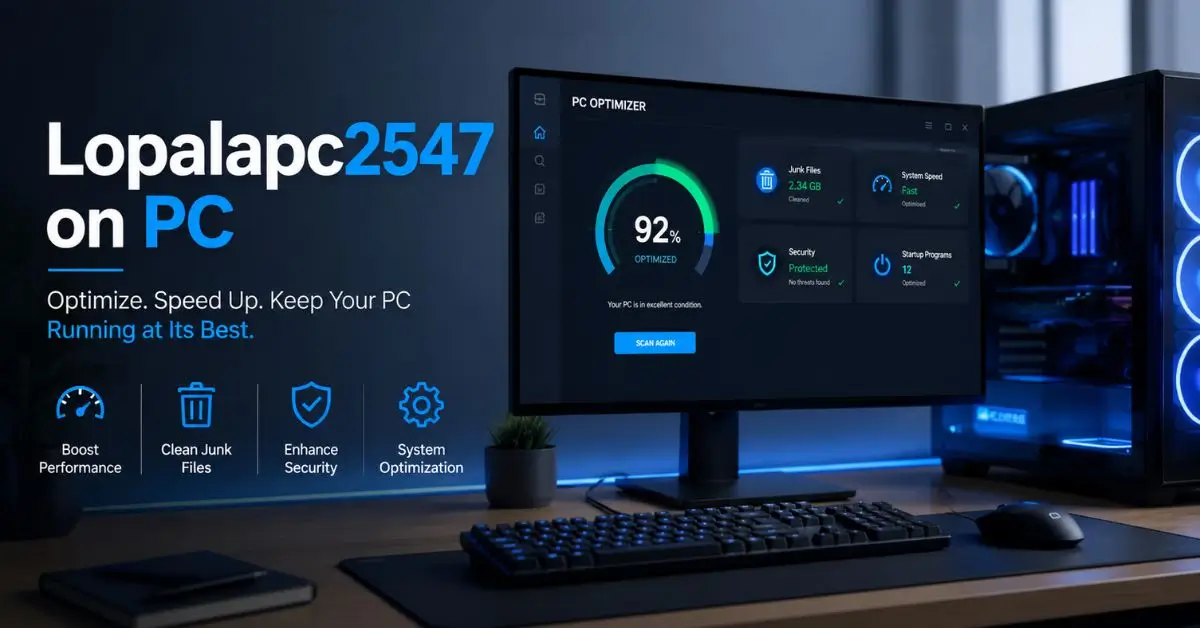
Most people searching for a specific software or platform by name are already past the discovery stage. They have heard about it from somewhere, seen it mentioned in a forum or a friend’s recommendation, and now they want to understand exactly what it is and how it actually works on their computer before committing time or storage space to it.
That is a smart approach. Installing something on your PC without understanding what it does, what it requires from your system, and what experience to expect is how people end up with software that underperforms, conflicts with other applications, or simply does not do what they expected.
This guide covers everything you need to know about Lopalapc2547 on PC. What it is, how it functions in a Windows environment, what your system needs to run it properly, how to set it up, and what to do if something goes wrong.
Lopalapc2547 on PC refers to a specific software application or digital platform designed to run within a personal computer environment, primarily on Windows-based systems. The identifier combines a platform name with a version or build code, indicating a defined release of the application. It is built to deliver a particular set of functions or digital experiences to users through their desktop or laptop hardware.
Lopalapc2547 on PC is a version-specific software application for personal computers. This guide explains what it does, what your system needs to run it, how to install and configure it properly, and how to troubleshoot common issues you might encounter.
Before getting into setup or system requirements, it is worth establishing a clear picture of what this application represents in the broader PC software landscape.
Software identifiers like Lopalapc2547 follow a common naming convention used by developers to track specific builds or versions of an application. The “pc” component signals that this release is specifically designed and optimized for personal computer environments rather than mobile, console, or web-based platforms.
This matters because PC-specific software builds are developed with desktop and laptop hardware in mind. They take advantage of the processing power, memory capacity, storage speed, and input methods available on a PC in ways that cross-platform or mobile-first applications do not always do.
Think of it this way: when a developer releases a PC-specific version of an application, they are making deliberate decisions about how the software uses your processor, how it manages your RAM, how it reads from your storage drive, and how it interacts with your operating system. A PC-optimized build feels and performs differently than the same application running through a browser or on a mobile device.
Understanding this helps you set appropriate expectations and make better decisions about whether this application fits your setup.
System requirements are the first practical consideration for anyone thinking about installing Lopalapc2547 on PC. Running software on hardware that does not meet the minimum requirements leads to poor performance, instability, or a complete failure to launch.
Here is a general framework for understanding what PC software in this category typically requires, and how to check whether your system qualifies.
Processor: Most modern PC applications require at least a dual-core processor, with quad-core or higher recommended for smooth performance. Older single-core processors struggle with applications that run multiple processes simultaneously.
RAM: 4GB of RAM is typically the minimum for running most current PC applications without significant slowdowns. 8GB is comfortable for most users, and 16GB provides headroom for running the application alongside other programs simultaneously.
Storage: Available disk space matters for both installation and ongoing operation. Many applications require more space than their initial install size because they create temporary files, cache data, and download updates over time. Having 10 to 20 percent of your drive free beyond the application’s stated requirements keeps performance healthy.
Operating System: PC software in this category most commonly runs on Windows 10 or Windows 11. Some older versions may support Windows 8.1, but Windows 7 and earlier are increasingly unsupported by modern applications due to security and API limitations.
Graphics: Applications with visual interfaces or rendering components may require a dedicated graphics card or at minimum integrated graphics that meet a specified performance threshold. For more demanding applications, a discrete GPU makes a meaningful difference.
Internet Connection: Many PC applications require an active internet connection for activation, updates, cloud sync, or online features. Knowing whether the application functions offline is important if you plan to use it in environments without reliable connectivity.
Checking these requirements against your actual system specs before installing is a simple step that prevents most compatibility problems.
If you are not sure what your current PC is capable of, finding out is straightforward on Windows systems.
Press the Windows key, type “System Information,” and open the application. This shows your processor model, installed RAM, and operating system version in one place. For graphics card information, open Device Manager and expand the Display Adapters section.
For storage, open File Explorer and right-click on your primary drive to select Properties. This shows total capacity and available space.
These four pieces of information, processor, RAM, OS version, and available storage, cover the basics of any system requirements check and take less than two minutes to gather.
Once you have confirmed your system meets the requirements, the installation process follows a pattern common to most PC software. Here is a general walkthrough of what to expect.
Step 1: Download from a verified source. Always obtain software from the official platform or a verified distribution partner. Downloading from unverified third-party sites introduces security risks including malware bundled with the installer.
Step 2: Run the installer with appropriate permissions. On Windows, right-clicking the installer file and selecting “Run as administrator” ensures the application has the permissions it needs to install correctly. Some applications fail to install properly when run without administrator rights.
Step 3: Follow the installation prompts carefully. Pay attention to each screen during installation. Some installers include optional additional software or browser toolbars that are selected by default. Review each step and deselect anything you did not choose to install.
Step 4: Complete any initial configuration. Many PC applications require initial setup steps after installation, including account creation, license activation, or preference configuration. Completing these properly before using the application saves troubleshooting time later.
Step 5: Restart your PC if prompted. Some applications require a system restart to complete installation. Skipping this step can cause unstable behavior or missing features until the restart is performed.
Step 6: Check for updates immediately after installation. Software packages often include updates that were released after the installer was built. Checking for and applying updates right after installation ensures you are running the most current and secure version from the start.
Running Lopalapc2547 on PC well is not just about meeting minimum requirements. A few additional habits make a meaningful difference in how smoothly the application performs over time.
Keep your operating system updated. Windows updates include security patches, performance improvements, and compatibility fixes that affect how applications run. An outdated OS is one of the most common causes of unexpected software behavior.
Maintain adequate free storage. As a general rule, keeping at least 15 percent of your primary drive free gives your operating system and applications enough space to operate efficiently. When drives fill up, performance degrades noticeably.
Close unnecessary background applications. Every program running in the background uses processor time and RAM. Closing applications you are not actively using frees those resources for the software you are focusing on.
Update your graphics drivers. If the application has any visual components, outdated graphics drivers are a frequent cause of display issues, crashes, and performance problems. Manufacturers like NVIDIA and AMD release regular driver updates that address these issues.
Use a wired internet connection when possible. For applications that rely on network connectivity, a wired connection provides more stable and consistent performance than Wi-Fi, particularly for data-heavy operations.
These habits benefit every application you run on your PC, not just this one.
Even with a well-prepared system, PC software occasionally runs into problems. Knowing how to approach common issues saves significant time and frustration.
Application will not launch: Check that your system meets all listed requirements. Try running as administrator. Verify that your antivirus software is not blocking the application, as security tools sometimes flag new software incorrectly.
Poor performance or stuttering: Check your RAM and processor usage in Task Manager while the application is running. If either is consistently near maximum capacity, the application is demanding more than your hardware can comfortably provide. Closing background applications frees up resources.
Installation failure: Make sure you have adequate disk space. Check that you have administrator rights. Temporarily disabling antivirus during installation sometimes resolves false positive conflicts, though re-enabling it immediately after is essential.
Application crashes during use: Check for available updates, as crashes are often addressed in newer builds. Review the application’s error logs if available. Performing a clean reinstall, removing all files including leftover data in the AppData folder, and reinstalling from scratch resolves many persistent crash issues.
Network connectivity errors: Confirm your internet connection is active. Check whether the application requires specific ports or firewall exceptions, as Windows Firewall sometimes blocks application network access by default.
| System Type | Typical Performance Level | Key Limitation | Best Use Case |
|---|---|---|---|
| Budget Laptop (4GB RAM, integrated graphics) | Minimum viable | Limited multitasking, slower load times | Basic use without demanding concurrent apps |
| Mid-Range Desktop (8GB RAM, dedicated GPU) | Comfortable and stable | Occasional slowdown with heavy workloads | Standard daily use with good responsiveness |
| High-Performance PC (16GB+ RAM, modern GPU) | Smooth and responsive | Cost of hardware | Power users and demanding application loads |
| Older PC (pre-2015 hardware) | May not meet requirements | OS and driver limitations | Likely incompatible with current builds |
| Gaming PC (16GB+ RAM, high-end GPU) | Optimal | Overkill for most applications | Best possible performance across all conditions |
Getting Lopalapc2547 on PC running well is mostly about preparation. Checking your system specs before you install, downloading from the right source, keeping your operating system and drivers updated, and maintaining basic PC health habits gets you most of the way there before you even open the application.
When issues arise, and occasionally they will with any software, working through the troubleshooting framework in this guide covers the most common causes without requiring advanced technical knowledge.
If you want to go further, explore our guide on how to optimize your Windows PC for better software performance or our practical breakdown of how to manage PC applications and keep your system running cleanly. Both will help you get more out of every application you run.
Lopalapc2547 is a PC application designed for Windows that uses your system’s hardware to deliver its features and performance.
Most versions require Windows 10 or later, a dual-core processor, 4GB RAM, available storage, and an internet connection.
Yes, if downloaded from the official or a trusted source. Avoid third-party download sites.
Low RAM, high CPU usage, or limited storage are common causes. Close background apps and keep your system updated.
Go to Settings > Apps, uninstall the program, and remove any leftover files from the AppData folder if needed.