
 By James Anderson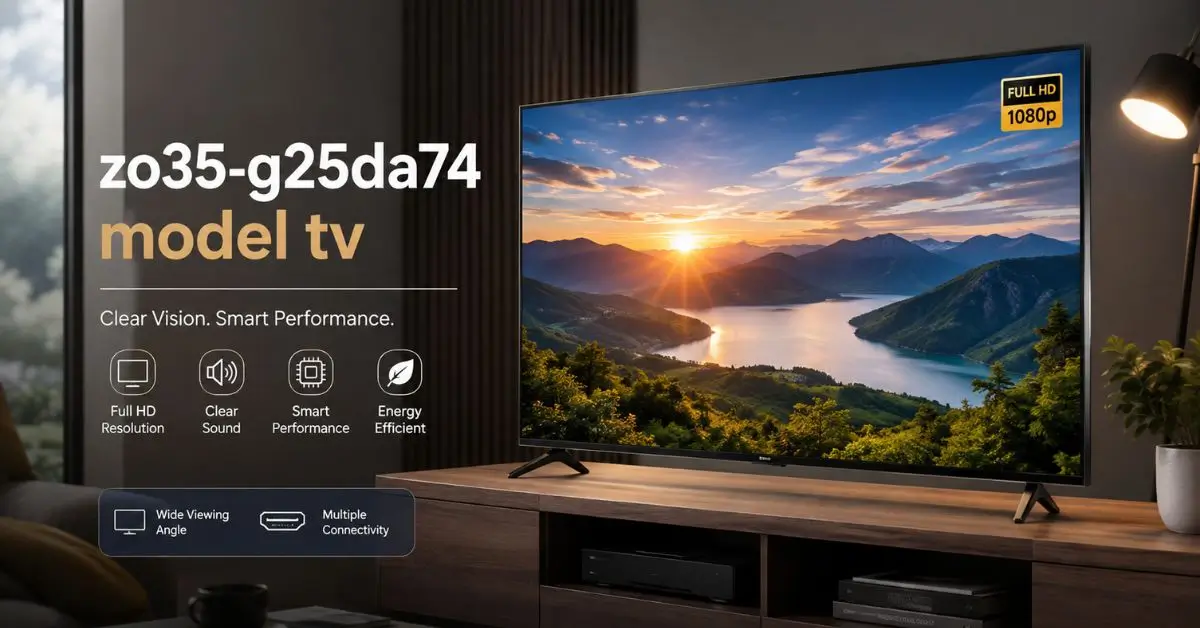
Buying a television in today’s market is more complicated than it used to be. Model numbers like ZO35-G25DA74 don’t tell you much at first glance they’re manufacturer codes that mean everything to the production team and almost nothing to the person trying to decide whether this is the right screen for their living room, home office, or business environment.
The real problem is that most product pages for specific TV models give you a list of specifications without explaining what those specifications actually mean for your daily viewing experience. You see numbers, refresh rates, nit values, panel types but you don’t know how they translate into whether the TV will look good in a bright room, whether it’s worth the asking price compared to alternatives, or whether it’s the right fit for how you actually use a screen.
This guide solves that problem. It explains what the ZO35-G25DA74 model TV is, what its core specifications mean in practical terms, who it’s designed for, how it fits within its price and performance category, and what you should know before committing to a purchase. Whether you’re buying for home entertainment, a home office setup, or a business display environment, this is the information you need to make a confident decision.
The ZO35-G25DA74 model TV is a specific television model identified by its manufacturer model number, a code that encodes information about screen size, series, panel type, and production specifications. Understanding this model involves breaking down what its technical specifications mean for picture quality, smart features, connectivity, and practical performance in real viewing environments.
The ZO35-G25DA74 model TV is a specific display unit with defined technical specifications that determine its picture quality, smart capabilities, and suitability for different environments. This guide explains what those specs mean practically and who this TV is best suited for.
Before diving into what this TV does, it’s worth understanding what a model number like ZO35-G25DA74 communicates because decoding it helps you understand where the product sits in the manufacturer’s lineup.
TV model numbers are structured codes, not random strings. Different manufacturers use different naming conventions, but most encode screen size, series or tier, panel type, year of manufacture, and regional variant within the model number.
In a model like ZO35-G25DA74, elements typically indicate:
- Screen size: the numerical component often references the diagonal screen measurement in inches
- Series designation: letters and numbers indicate which product line or tier the model belongs to within the manufacturer’s range
- Panel and feature generation: the remaining alphanumeric characters often encode the panel technology, smart platform version, or market variant
Understanding this structure helps you identify whether you’re looking at an entry-level, mid-range, or premium model and whether a product marketed under this number is genuinely suited to what you need it for.
When researching any specific TV model, always verify the model number directly with the retailer or manufacturer’s official product page to confirm you’re looking at accurate, current specifications for that exact unit.
The specifications attached to a TV model determine everything about how it performs. Here’s how to understand the most important ones in practical terms not just as numbers on a spec sheet.
Screen Size
Screen size is the diagonal measurement of the display in inches. The right screen size depends on viewing distance the standard recommendation is that your viewing distance in inches should be approximately 1.5 to 2.5 times the screen size. For a 55-inch TV, that means sitting 82 to 137 inches (roughly 7 to 11 feet) away.
In a US living room where the average viewing distance is 8–10 feet, a 55-inch screen in the right price range represents the best balance of immersive viewing and practical fit for most spaces.
Panel Technology
Panel type is one of the most significant specification decisions in any TV purchase. The three main options are:
LED/LCD the most common and most affordable panel technology. Picture quality varies significantly within this category based on local dimming implementation and backlighting approach. Generally delivers strong brightness but limited contrast compared to alternatives.
OLED produces perfect blacks because each pixel generates its own light and can turn off completely. Results in exceptional contrast, vibrant colors, and wide viewing angles. Premium pricing but increasingly available in mid-range segments.
QLED a quantum dot-enhanced LED/LCD panel that improves color volume and brightness compared to standard LED. Strong performance in bright rooms. Samsung’s primary panel technology branding, though other manufacturers use similar approaches.
For the ZO35-G25DA74 specifically, confirming the panel type is the first step in understanding whether the TV’s picture quality matches your viewing environment.
Resolution
Current TV resolution options are 4K (3840 x 2160 pixels) and 8K (7680 x 4320 pixels) at the premium end, with Full HD (1920 x 1080) still present in smaller and budget models.
For most US households buying a TV in the 40–75 inch range, 4K resolution is the practical standard. The difference between 4K and 8K is not meaningful at typical viewing distances or with current 8K content availability. The difference between 4K and Full HD is meaningful on screens above 43 inches at standard viewing distances.
Refresh Rate
Refresh rate is measured in Hz and indicates how many times per second the screen updates the image. Standard is 60Hz. Higher-end models offer 120Hz, which is meaningfully better for fast-motion content sports, action sequences, gaming. Some manufacturers advertise “effective” rates higher than native rates using motion processing these should be evaluated skeptically against confirmed native refresh rate.
For gaming use on PlayStation 5 or Xbox Series X, a native 120Hz panel with HDMI 2.1 support is necessary to access the consoles’ full performance capability.
HDR Support
High Dynamic Range (HDR) extends the range between the darkest and brightest parts of an image, creating more realistic and visually rich content when the source material supports it. HDR formats include HDR10, Dolby Vision, and HLG with Dolby Vision generally considered the most sophisticated, as it uses dynamic metadata to optimize picture quality scene by scene rather than applying a single setting to the entire content.
A TV that supports Dolby Vision as well as HDR10 covers the widest range of premium content formats currently available on streaming platforms and Blu-ray.
Brightness
Measured in nits, brightness determines how well a TV performs in different lighting conditions. For a bright living room in daylight, 400+ nits is the practical minimum for a satisfying HDR experience. 1000+ nits delivers genuinely impressive HDR highlights. OLED TVs typically have lower peak brightness than QLED alternatives but compensate with perfect black levels that create exceptional contrast ratios.
The smart TV platform determines how you access streaming services, navigate the interface, and connect to other devices in your home.
Smart Platform
Major smart TV platforms include Google TV, webOS (LG), Tizen (Samsung), and Roku TV (available across multiple manufacturers). Each has strengths:
- Google TV integrates Google Assistant, supports the widest range of apps, and works seamlessly with Android devices
- webOS is widely regarded as the most intuitive interface with excellent remote control design
- Tizen offers deep Samsung ecosystem integration and strong gaming features
- Roku TV is simple, reliable, and works well for users who primarily stream
For the ZO35-G25DA74, identifying which smart platform is included tells you how you’ll interact with the TV daily potentially a more significant daily-use factor than some picture quality specifications for casual viewers.
HDMI and USB Connectivity
Current-generation TVs should include at least two HDMI 2.1 ports for 4K/120Hz gaming capability, plus additional HDMI 2.0 ports for other devices. USB ports for local media playback, an optical audio output for soundbar connection, and an ethernet port for wired network connection round out a complete connectivity package.
Audio Output
Built-in TV speakers are almost universally disappointing at any price point. A soundbar or external audio solution transforms the viewing experience far more dramatically than most picture quality upgrades. Confirm whether the TV supports eARC (enhanced Audio Return Channel) on at least one HDMI port this enables lossless audio passthrough to a connected soundbar or AV receiver.
| Specification | What to Look For | Why It Matters |
|---|---|---|
| Panel Type | OLED for contrast; QLED for brightness | Determines picture quality fundamentals |
| Resolution | 4K minimum for screens over 43 inches | Sharpness at viewing distance |
| Refresh Rate | Native 120Hz for sports and gaming | Motion clarity in fast content |
| HDR Format | Dolby Vision + HDR10 ideally | Premium streaming content quality |
| Brightness | 400+ nits for bright rooms | Visibility in daylight environments |
| Smart Platform | Google TV, webOS, or Tizen | Daily interface usability |
| HDMI 2.1 | At least 2 ports | Gaming and future device compatibility |
| Input Lag | Under 15ms in game mode | Gaming responsiveness |
Understanding the TV’s specifications in context helps identify which buyers will get the most value from it.
Home Entertainment Users
The primary audience for any mid-range TV is home entertainment movies, streaming, casual gaming, and sports viewing. For this use case, picture quality fundamentals panel type, HDR support, and refresh rate matter most alongside smart platform usability.
Home Office and Hybrid Work Users
A 40–50 inch TV used as a large computer monitor or presentation display benefits from good text clarity, multiple input options, and minimal input lag. These are distinct requirements from pure entertainment viewing that may or may not be addressed depending on the model’s specifications.
Business Display Applications
Hotels, restaurants, waiting areas, and retail environments use commercial-grade displays or consumer TVs depending on use case and budget. A consumer TV model like the ZO35-G25DA74 may serve light commercial display needs, but for environments requiring extended hours operation and remote content management, purpose-built commercial displays are the more appropriate choice.
Gaming Users
Gamers benefit from 120Hz native refresh rate, HDMI 2.1 support, low input lag (under 15ms in game mode), Variable Refresh Rate (VRR) support, and Auto Low Latency Mode (ALLM). Confirming whether the ZO35-G25DA74 includes these features determines its gaming suitability clearly.
Before committing to the ZO35-G25DA74 or any specific TV model, verify these points directly with the retailer or manufacturer:
Confirm the model number exactly
Model numbers sometimes vary by retailer a number that appears identical may encode a regional variant with different specifications. Confirm the full model number matches what you’ve researched.
Check current pricing against comparable models
TV prices shift frequently. Compare the ZO35-G25DA74 against models with similar specifications in the same size category from competing manufacturers before purchasing. The TV market is competitive enough that a better specification set at the same price point is always worth checking.
Read verified buyer reviews for long-term reliability
Manufacturer specifications describe a TV at launch. Verified buyer reviews particularly those written after six months or more of ownership reveal real-world performance consistency, remote reliability, software update quality, and any recurring issues.
Verify warranty coverage
Standard US consumer electronics warranty coverage is one year for parts and labor. Extended warranty options vary by retailer. For a business display application, confirm whether the warranty covers commercial use many consumer TV warranties explicitly exclude commercial deployment.
Choosing the right TV model involves understanding what the specifications mean for your specific situation, not just reading numbers on a product page. Whether the ZO35-G25DA74 model TV is the right choice for your home, office, or business environment depends on matching its confirmed specifications to your actual needs: viewing distance, room lighting, content type, gaming requirements, and budget.
Use this guide as your evaluation framework for this model and any other TV you’re considering. And if you want more help comparing display technology or building the right entertainment setup, explore more technology and home display content on this site.
ZO35-G25DA74 is a specific TV model identified by its manufacturer model number. Check the manufacturer or retailer for confirmed specifications.
TV model numbers identify details such as series, screen size, technology, production year, and market variant.
Panel type, HDR support, refresh rate, resolution, and screen size are the key specifications to consider.
Yes. 4K provides sharper images and is now standard on most modern TVs above entry-level models.
OLED offers deeper blacks and excellent contrast, while QLED generally provides higher brightness and works well in bright rooms.
Look for 4K resolution, 120Hz refresh rate, HDMI 2.1, VRR, ALLM, and low input lag for the best current-generation gaming experience.